Hides
3D Printed Corner Terrarium Hide with Water Bowl, Tree Stump Reptile Cave for Vivarium, Crested Gecko Dart Frog Isopod Decor
$34.99+
-
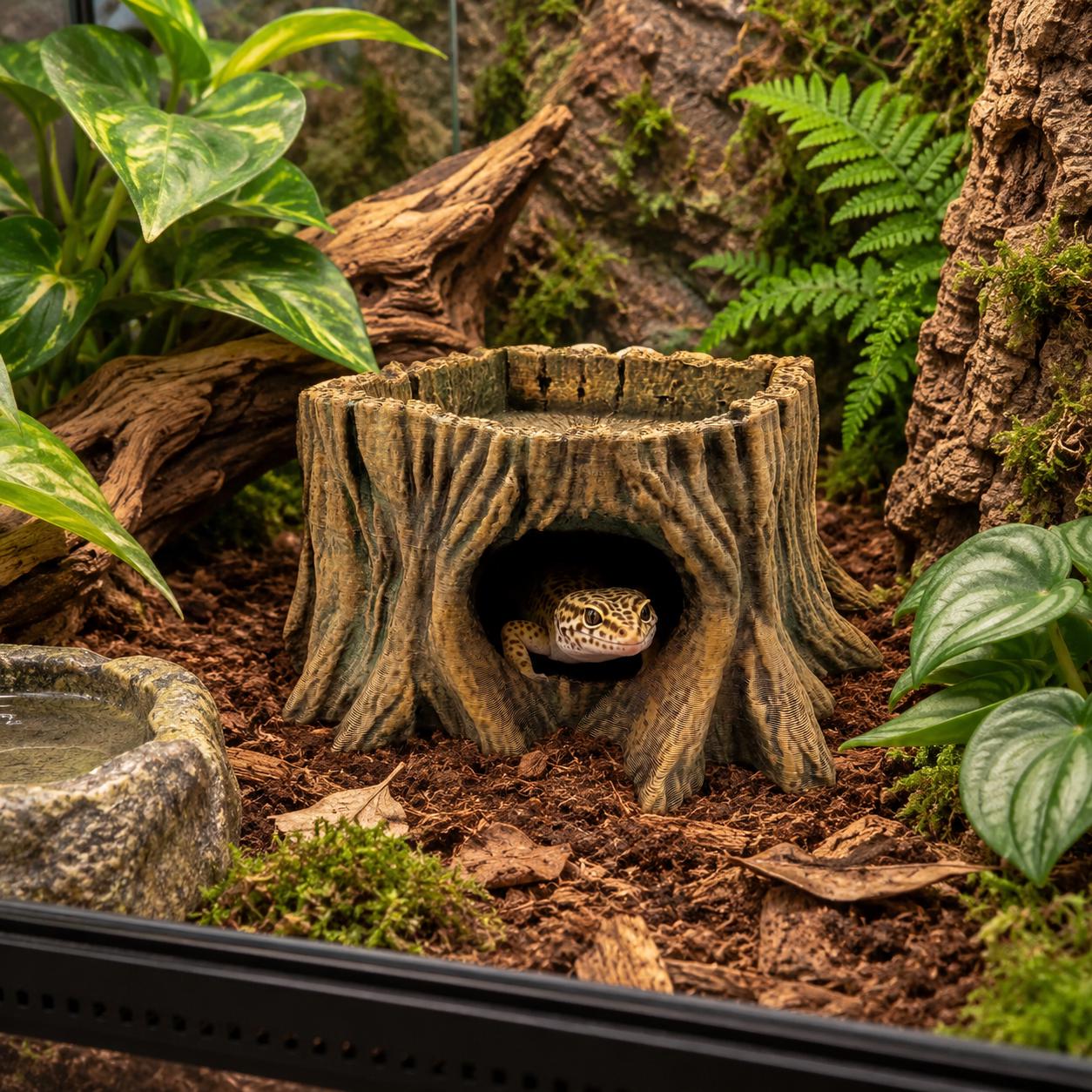
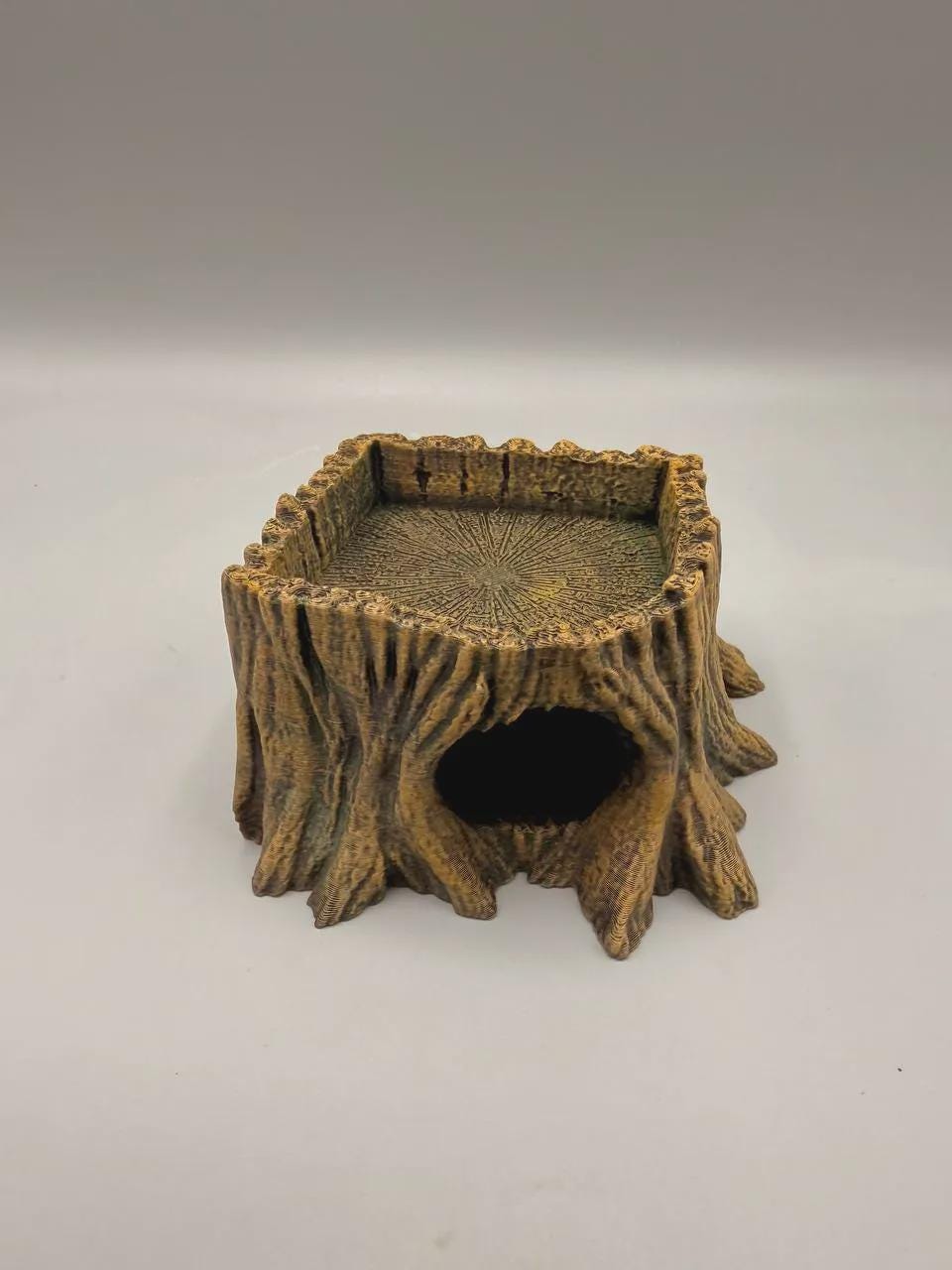
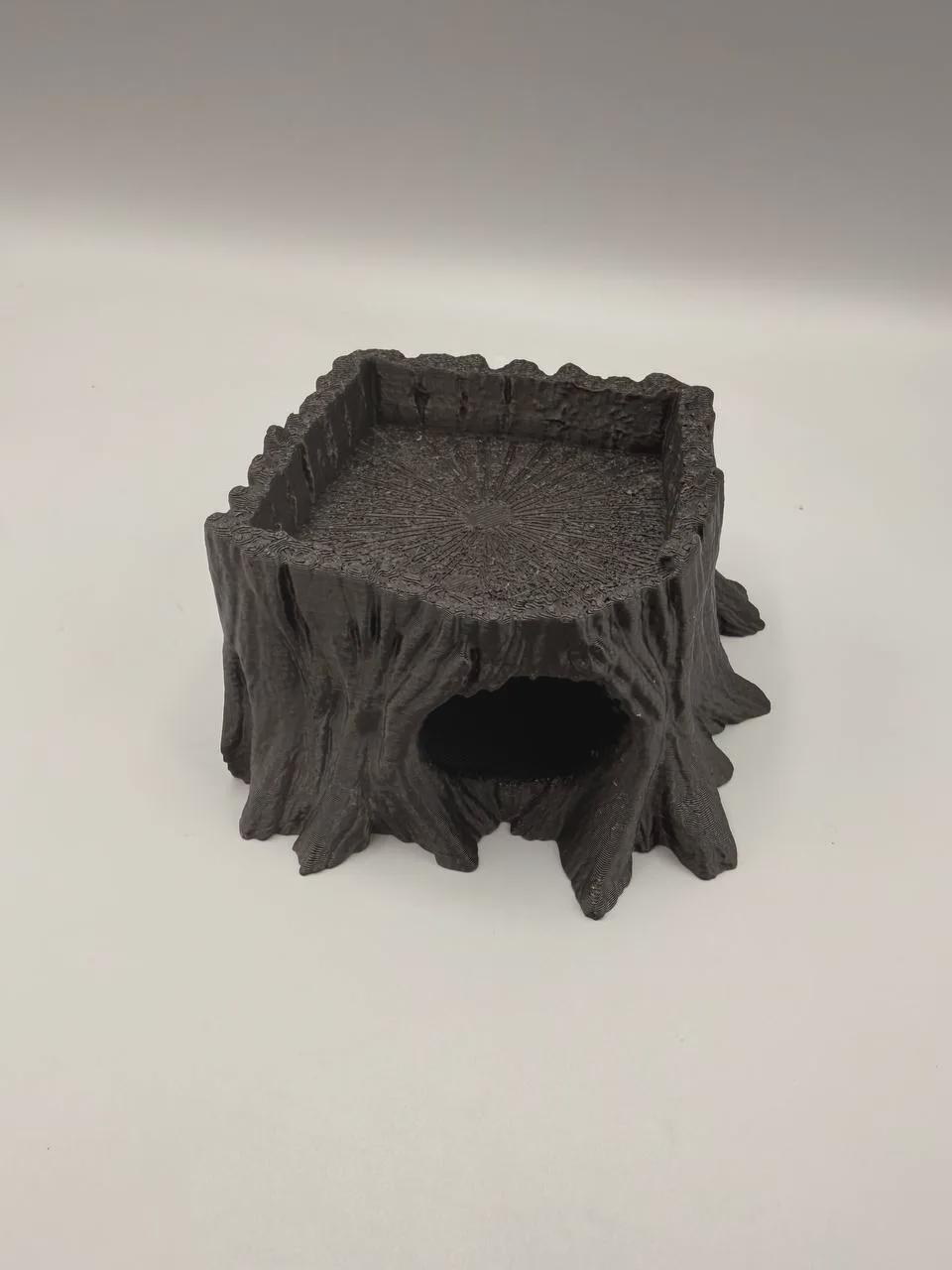
DetailsA weathered tree stump settles into the back corner of the enclosure, roots spreading across the substrate and a shallow basin worn into its crown. Underneath, a single arched opening leads into a quiet, shaded chamber where a shy animal can tuck itself out of sight. The 90 degree back makes it sit flush into a corner, so it reads as part of the landscape instead of an object dropped in the middle of the floor.
📖 Full Product Description
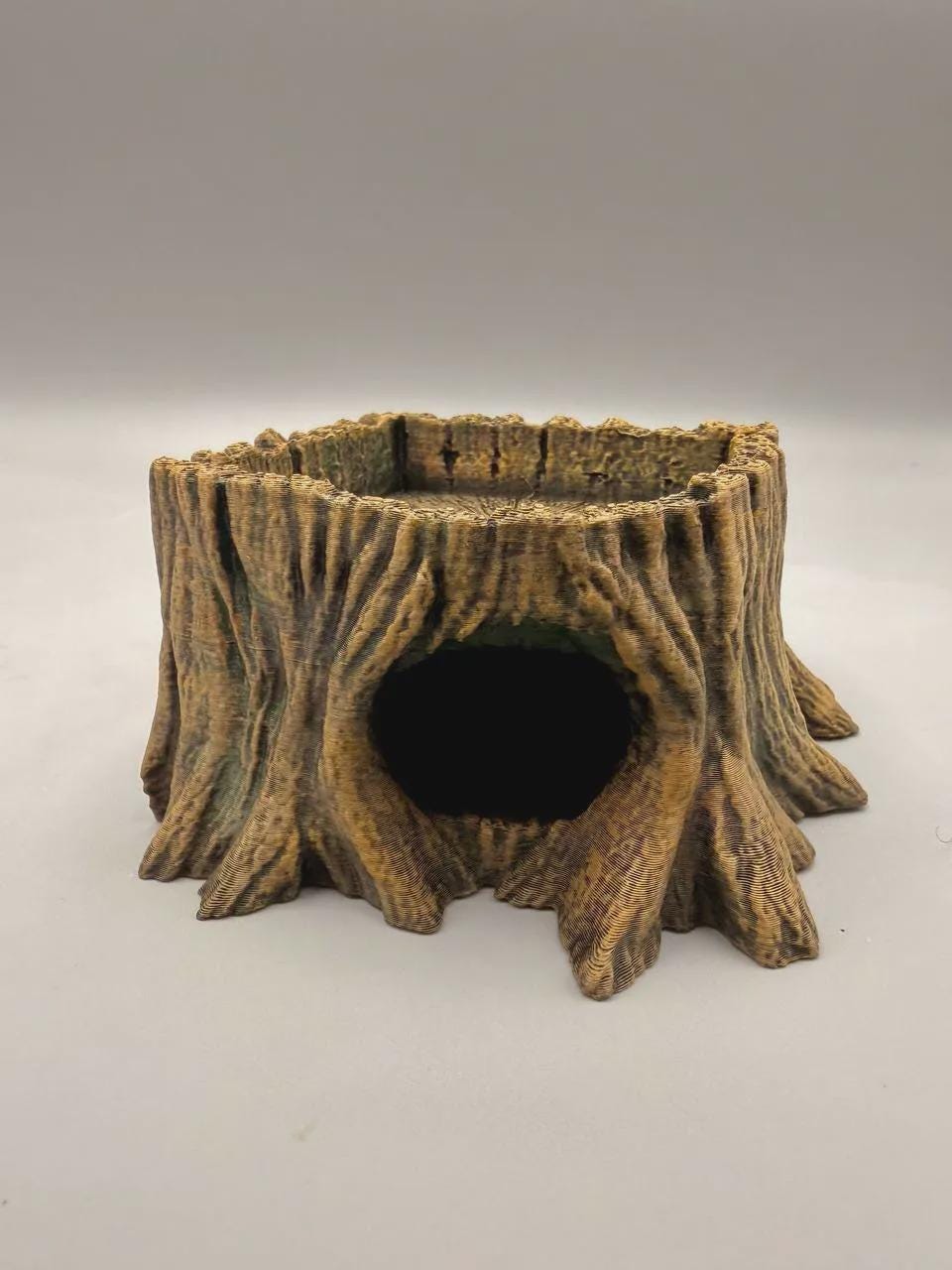
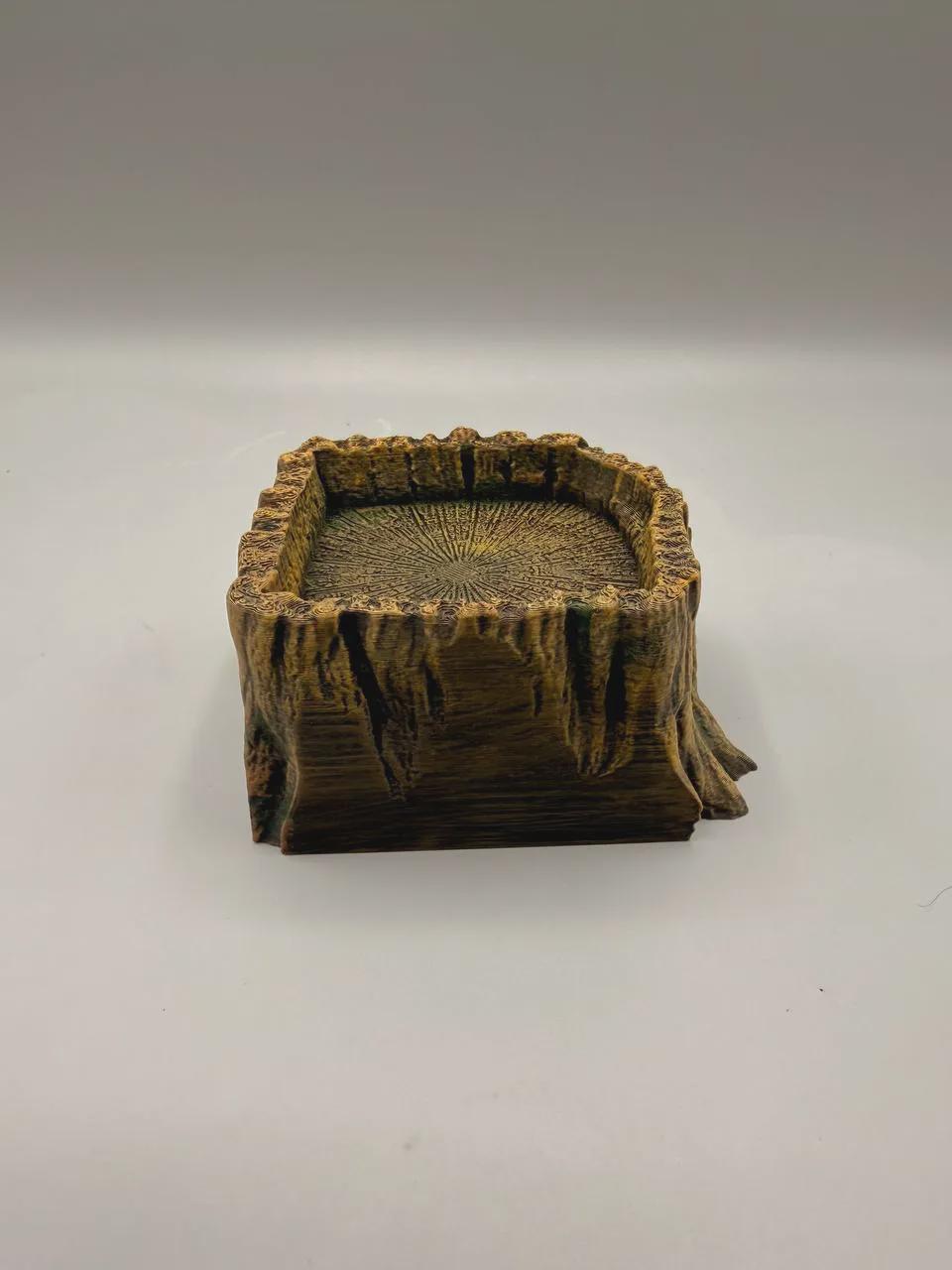
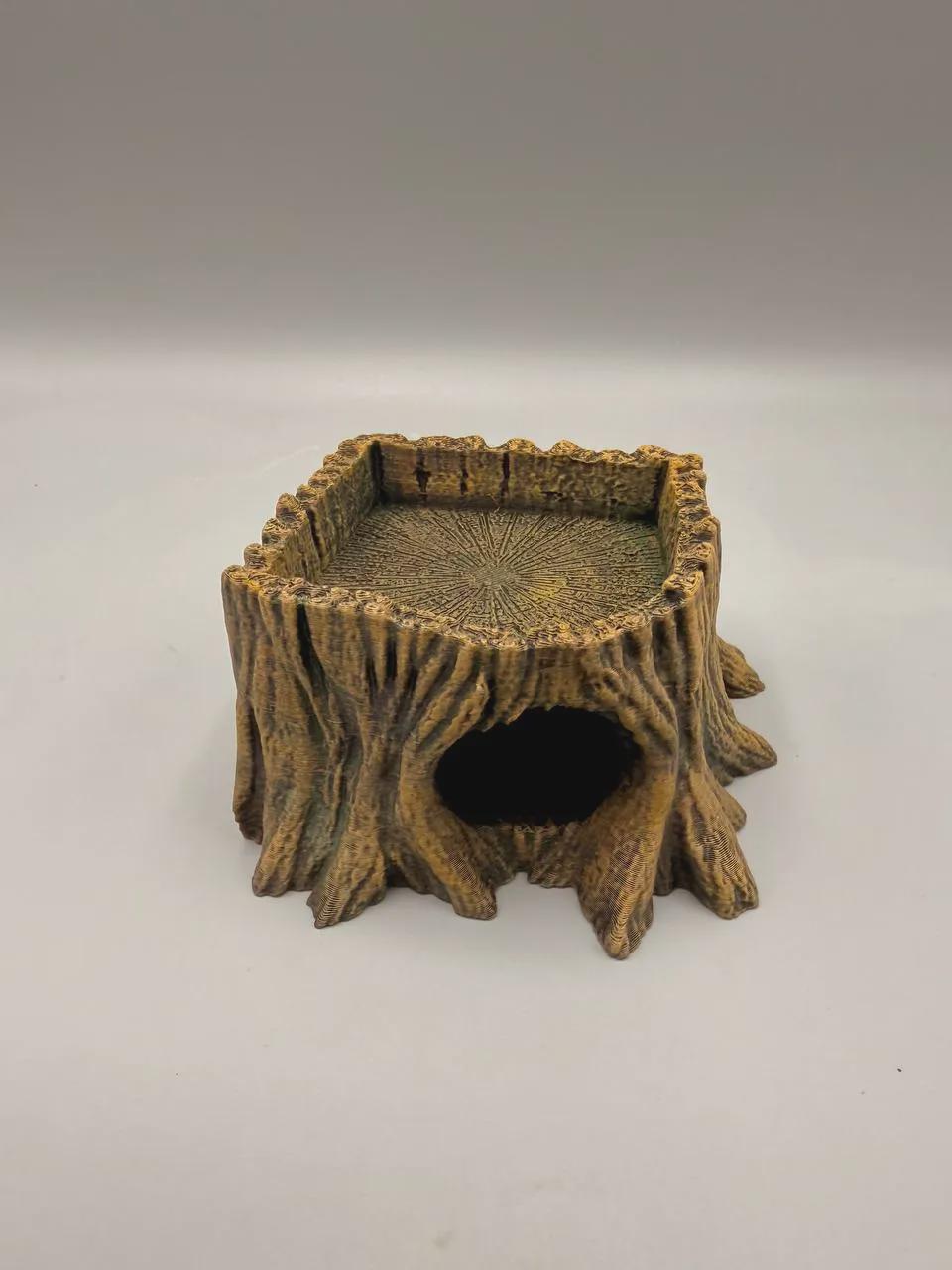
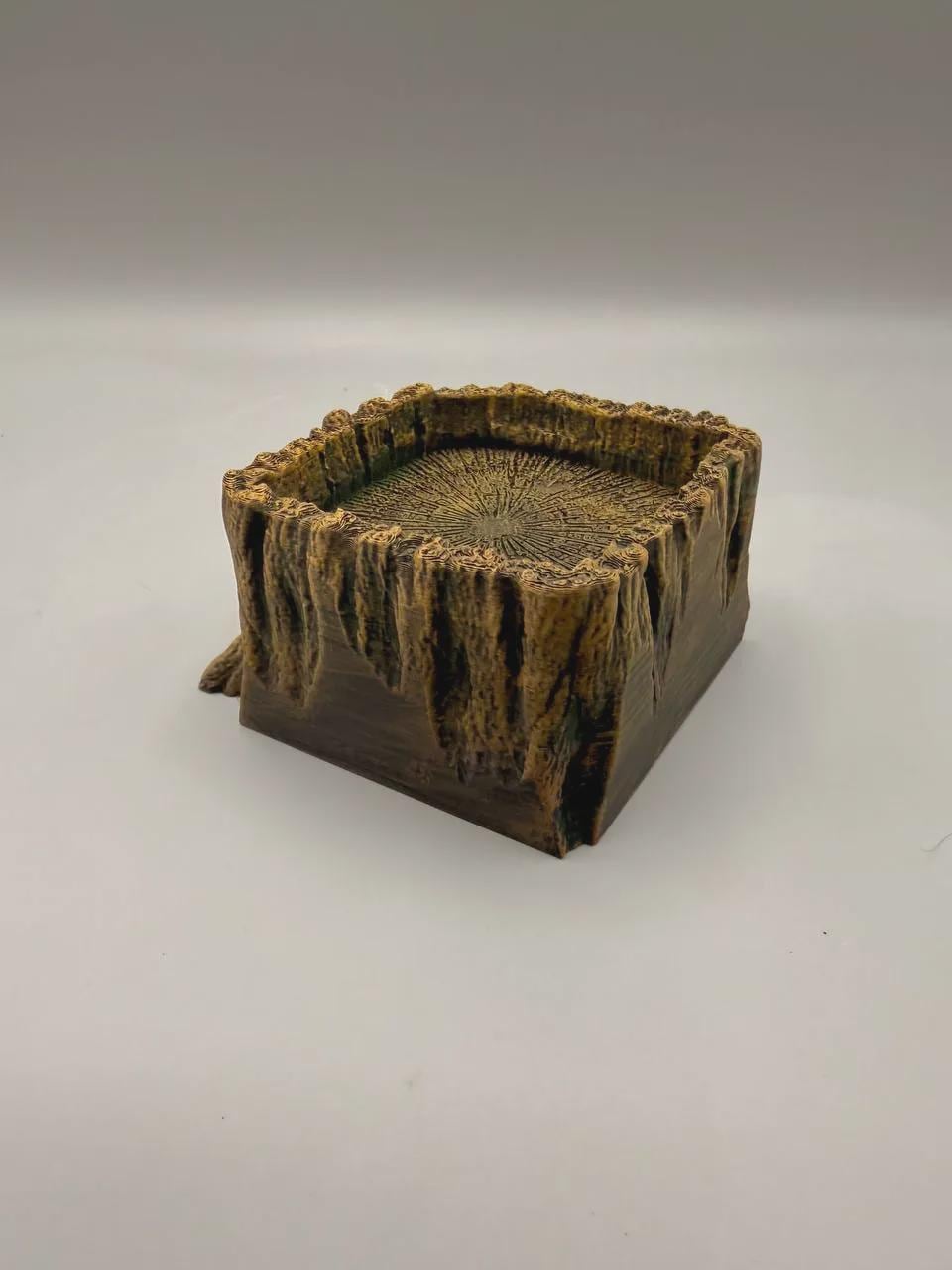
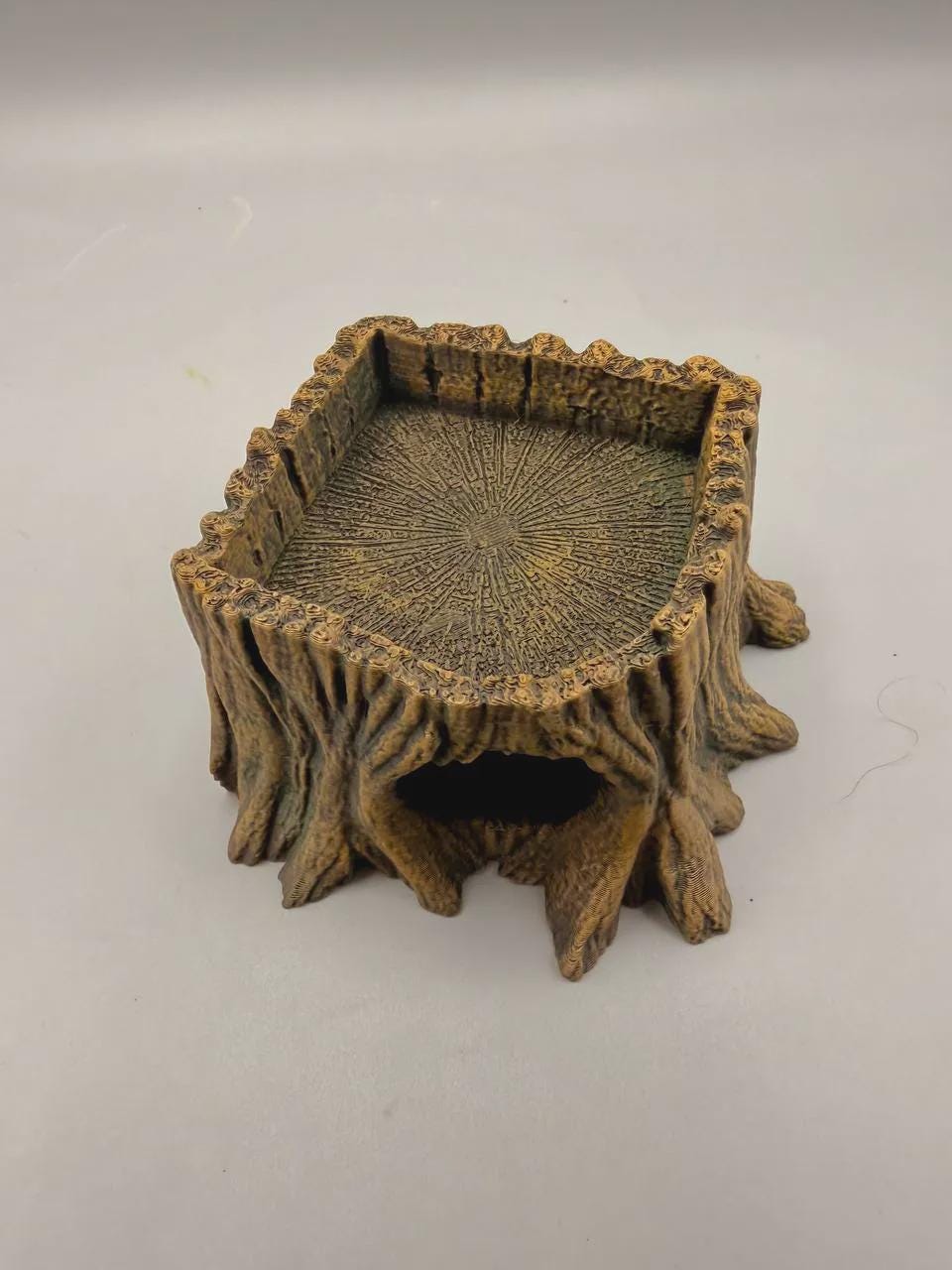
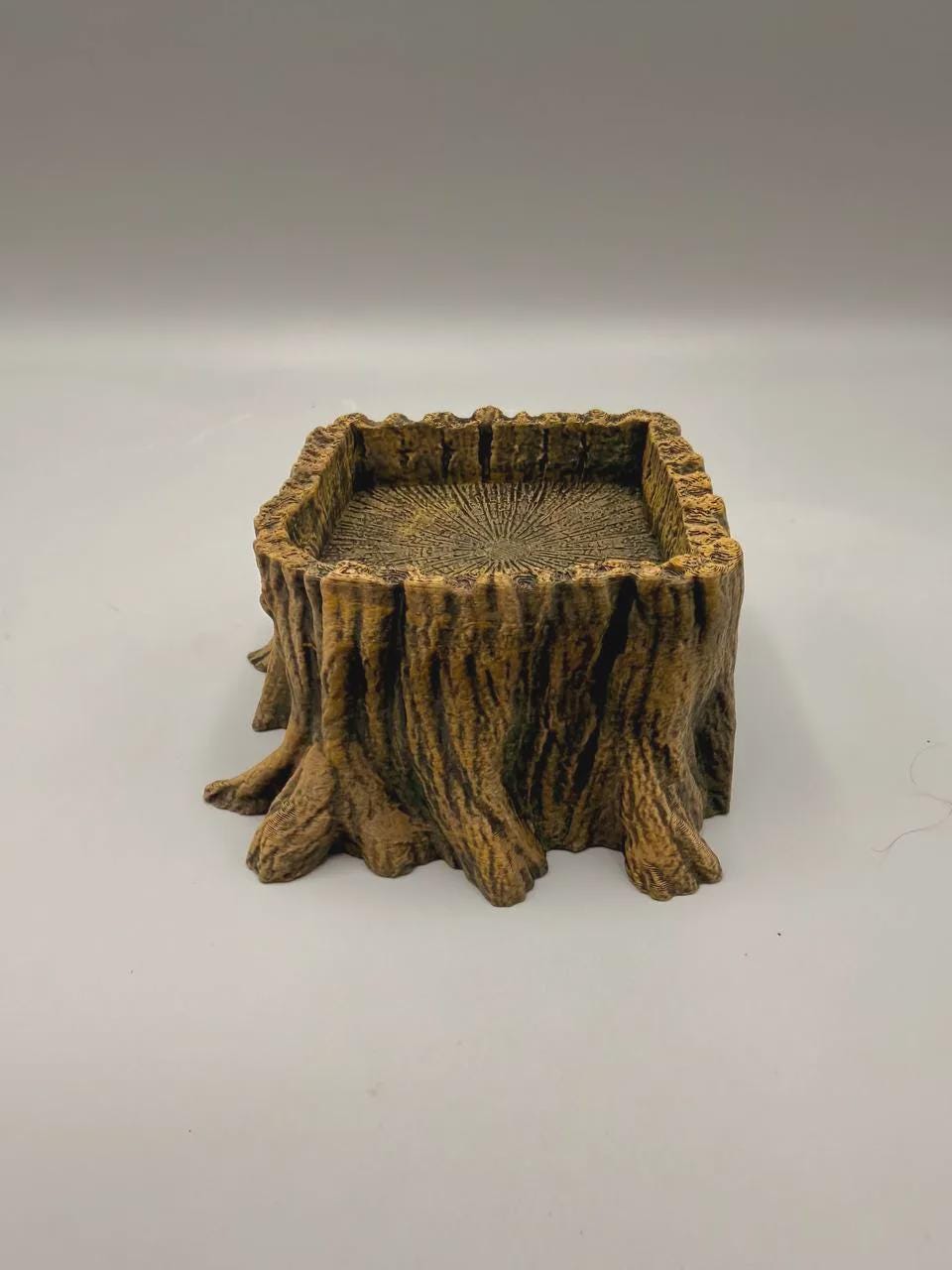
This is a 3D printed corner hideout shaped like a natural tree stump. The exterior is sculpted with bark texture, root flares, and irregular growth rings so it looks like the base of a long dead tree rather than a molded plastic ornament. Two flat faces meet at a 90 degree angle on the back, letting the piece press neatly into a corner of a terrarium, vivarium, or paludarium land section and free up floor space in the middle of the enclosure.
The structure is simple and honest: one arched entrance on the front face leads into a single open chamber inside. There are no side tunnels or secondary exits, which makes the interior easy to see into during checks and easy to reach when you clean. On top, a shallow basin is worked into the surface of the stump. It can hold a small amount of water, or you can fill it with sphagnum moss, leaf litter, or a little substrate and use it as a planting pocket for a small plant or a moss cushion. Decide for yourself whether the basin suits your animals and your routine, and clean it regularly if you keep anything moist in it, since layered 3D printed surfaces need more attention than smooth glass or ceramic.
The naturalistic stump styling works across a wide range of builds. For a misted, planted, or bioactive setup, the PETG Wet Model suits high-humidity residents such as dart frogs, tree frogs, crested geckos, and day geckos, along with humidity-loving invertebrates like tropical isopods and springtails. For a drier build, the PLA Dry Model fits arid-terrarium and display keepers who house animals such as many tarantulas, temperate isopods, and millipedes. Match the version to your habitat’s humidity, and compare the entrance width and interior height against the adult size and behavior of your specific animals before use.
Four sizes are offered, from a compact hide for small invertebrate enclosures up to a larger shelter for roomier terrariums. Every size ships as a single piece. Outside the hobby, the same stump reads well as tabletop terrain, a diorama base, or a shelf piece, and the PLA Dry Model is the right choice for those uses.
You receive one Root Hideout corner hide in the size, material, and filament color you select, printed unpainted. Because each one is printed to order, the layer character and texture will be slightly unique to your piece.
✔️ Key Features
✔ Naturalistic tree stump design
✔ 90 degree corner shape that sits flush into an enclosure corner and saves floor space
✔ One arched entrance leading into a single open chamber, easy to inspect and easy to clean
✔ Shallow integrated basin on top for water, moss, leaf litter, or a small planting pocket
✔ Sculpted bark texture, root flares, and growth rings for a real deadwood look
✔ PETG Wet Model for high-humidity, misted, bioactive, or high-UV setups, always shipped unpainted
✔ PLA Dry Model for arid terrariums, dioramas, tabletop terrain, and dry display
✔ Four sizes, each printed as a single piece
✔ Lightweight and simple to reposition during maintenance
✔ Made to order
🧱 Material Options
This hide is offered in two versions across all four sizes, so you can match it to your enclosure:
PETG Wet Model
Choose this version for high-humidity, misted, bioactive, or partially submerged setups, for anything where the top basin holds water, and for enclosures under high-output UV lighting. It is printed in PETG and supplied completely unpainted. CurioPrinta uses PETG for these conditions rather than standard PLA because PETG stands up to prolonged moisture and UV exposure far better than PLA. That is a material choice, not a guarantee: continuous high-output UV can still gradually embrittle PETG over time, and PETG is not permanently waterproof, indestructible, chemically inert, or universally suitable for every animal or water condition.
PLA Dry Model
Choose this version for arid terrariums, dioramas, tabletop terrain, shelf display, and general home decor. PLA versions are not recommended for submerged use, constantly wet or heavily misted enclosures, setups with strong UV lighting, or any use where the top basin will be kept filled with water. Pick PLA only when the piece will stay dry and out of intense UV.
🔧 Setup, Use & Care
For terrarium, vivarium & paludarium use
💧 Rinse the hide thoroughly with clean water before placing it in an enclosure.
🚫 Avoid soaps, detergents, household cleaners, and unapproved chemical treatments.
🌡️ Verify the material and design suit your habitat’s temperature, humidity, lighting, and species, and choose the PETG Wet Model for damp or UV-lit setups.
🔥 Keep it away from direct contact with high-output heat lamps, heating elements, and other intense heat sources.
🧱 Seat it firmly on level substrate against the corner so it cannot tip, shift, or settle onto an animal, and check that burrowing species cannot undermine it.
🦎 Compare the entrance opening and interior height against your animal’s adult size before use.
💦 If you use the top basin for water, keep the volume small and appropriate for your species, refresh it often, and scrub it as part of routine maintenance.
🧹 Inspect regularly for wear, damage, trapped waste, or areas that are hard to clean, and remove the piece if it becomes damaged or develops sharp edges.
📘 Let qualified, species-specific husbandry guidance take priority over general product suggestions.
Cleaning
For the PETG Wet Model, rinse with clean water and use a soft brush when needed, paying attention to the basin and the inside of the chamber. Avoid soaps, bleach, solvents, abrasive cleaners, boiling water, dishwashers, and high-temperature cleaning. Allow it to dry completely if it is removed for long-term storage. For the PLA Dry Model, dust with a soft brush or cloth, use a lightly damp cloth when appropriate, and keep it away from intense heat.
📐 Dimensions
Approximate dimensions (Width × Depth × Height), imperial first with metric in parentheses:
Small (S1) 3.9" × 3.9" × 2.1" (99 × 100 × 54 mm)
Medium (S2) 4.7" × 4.7" × 2.6" (119 × 120 × 65 mm)
Large (S3) 5.5" × 5.5" × 3.0" (139 × 140 × 75 mm)
Extra Large (XL) 6.2" × 6.3" × 3.4" (158 × 160 × 86 mm)
Because each item is individually 3D printed, minor dimensional variation may occur.
🎨 Color and Appearance
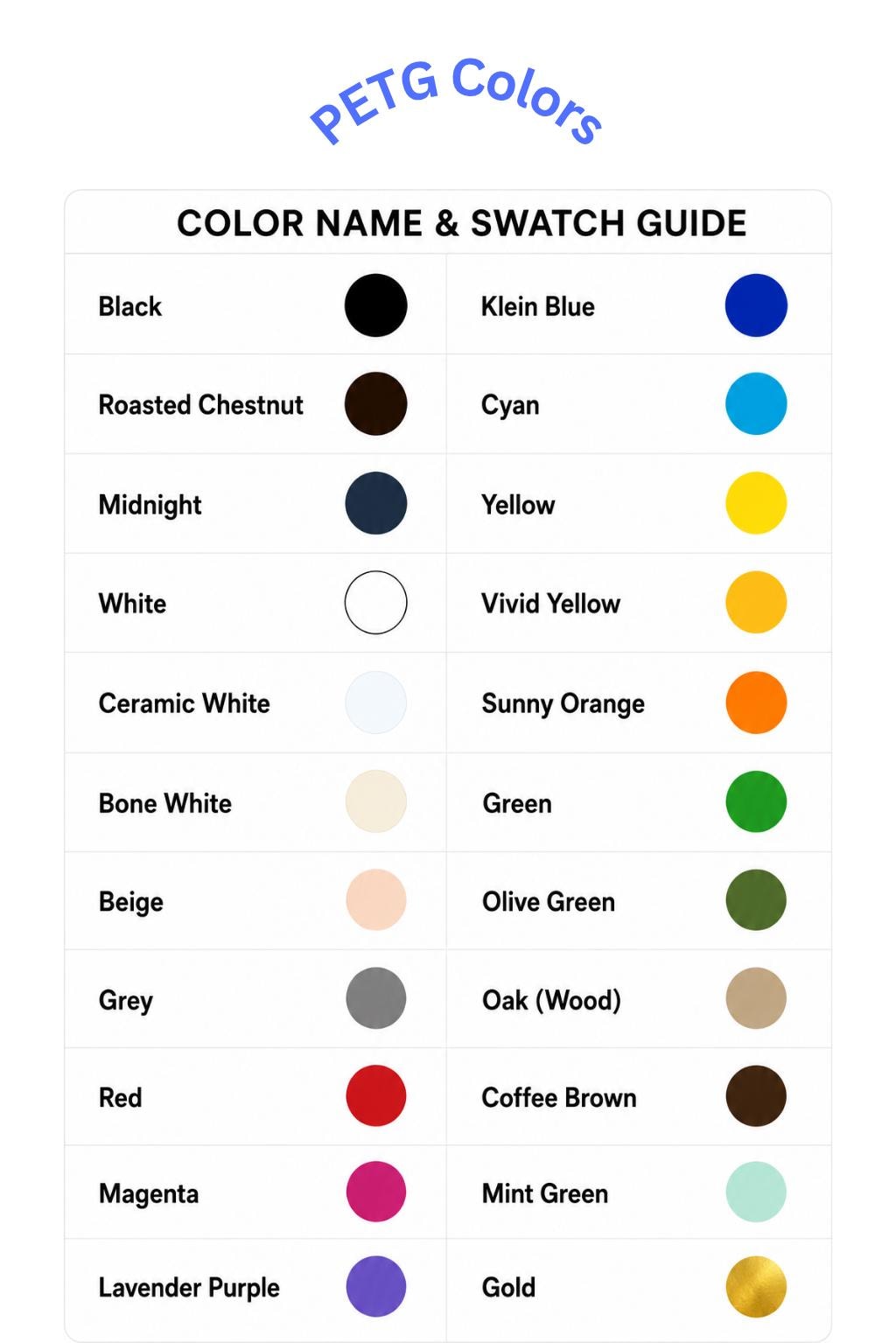
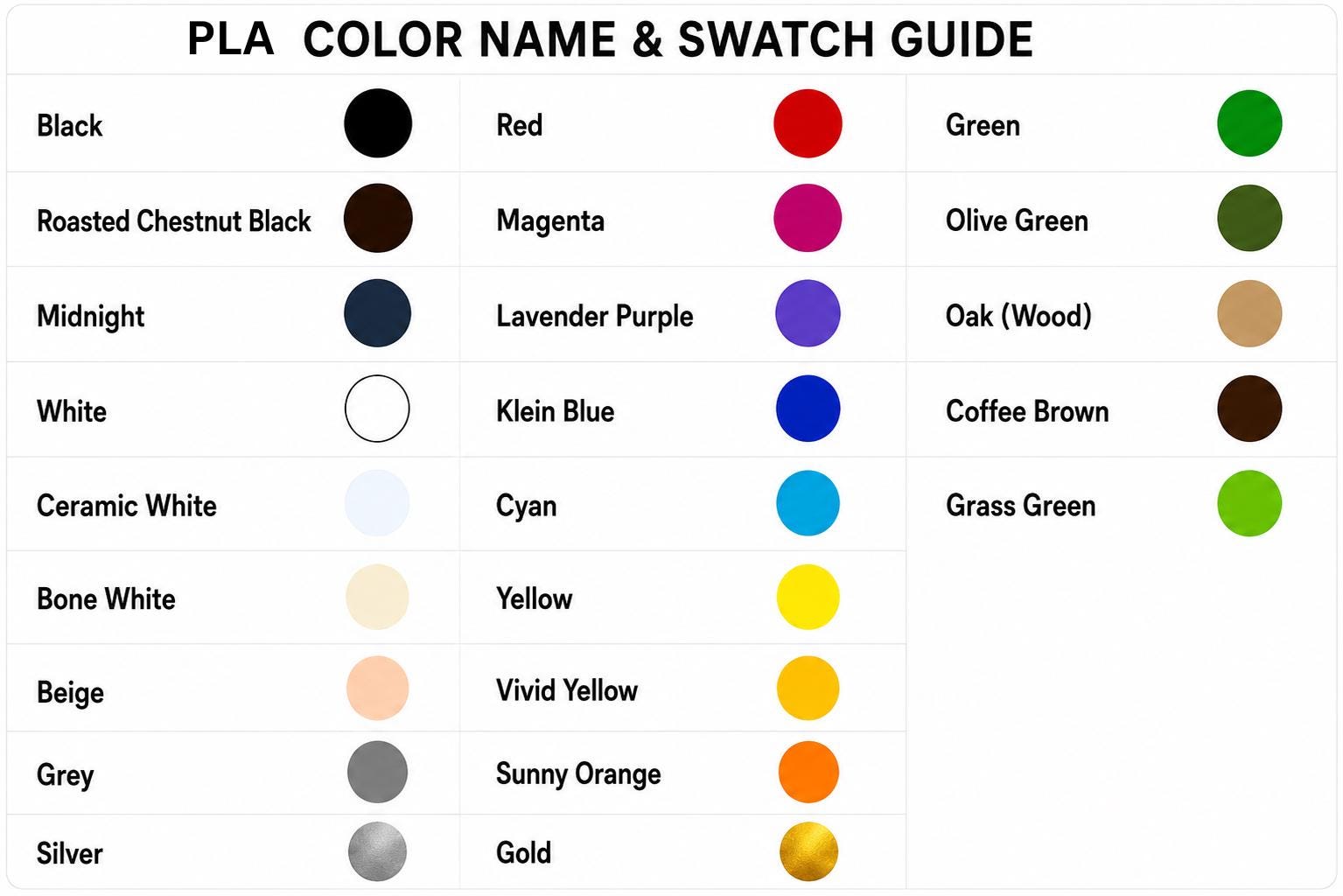
The hide is printed in a solid-color filament and is not painted, so the bark texture and root detail come from the sculpt and the layer lines rather than from applied finish. Some listing photos show the model painted; those are finishing examples only, and your piece ships unpainted.
Colors may look slightly different in person because of lighting, photography, monitor settings, and filament batches. Appearance can also shift under bright terrarium lighting or when the surface is wet from misting. Natural-looking variation comes from choosing an appropriate filament color rather than from paint, and an exact color match is not promised.
🖨️ About 3D Printing
This item is created using FDM 3D printing technology. Fine layer lines, small seams, slight texture changes, and minor variations are normal characteristics of the process. These details are not considered defects and make each piece slightly unique. Support-contact marks may appear in hidden or recessed areas such as the inside of the chamber or under the entrance arch, and minor cosmetic differences can occur between prints because each hide is individually produced rather than injection molded.
🛠️ Made to Order
Each hide is printed individually after you order, so minor differences between pieces are normal. Production time is separate from shipping time.
🧩 All four sizes print and ship as a single piece. There is no assembly, and no glued or bolted sections.
⚠️ Safety and Compatibility
This product is decorative habitat decor, not a toy. You are responsible for deciding whether the size, material, entrance opening, basin, surfaces, and placement are appropriate for your specific animals and habitat. Animals should not be allowed to chew or ingest the material, and the item should be removed if it becomes damaged, as small parts or broken pieces may present a hazard. CurioPrinta cannot account for every species, animal behavior, enclosure design, water chemistry, temperature, or maintenance routine, so please confirm suitability for your own setup before use.
CurioPrinta does not describe this product as "reptile safe," "non-toxic," "food safe," or guaranteed for any specific animal, and that includes the integrated basin. Naming a species anywhere in this listing is for search relevance and design context, not a compatibility or safety claim.
📦 What Is Not Included
You receive one 3D printed Root Hideout corner hide in the size, material, and color you select, printed unpainted. Everything else shown in the product photos is not included, for example:
🌿 Plants, moss, leaf litter, and substrate
🪨 Rocks, wood, and other hardscape props
🐢 Animals
💡 Lighting, and the terrarium or vivarium enclosure itself
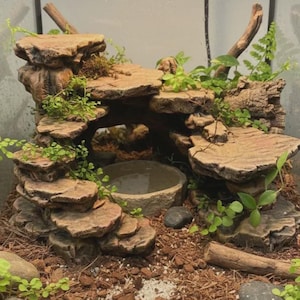
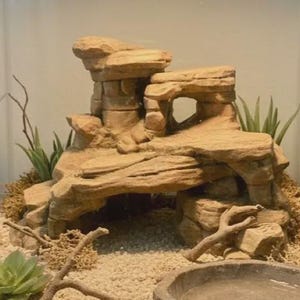
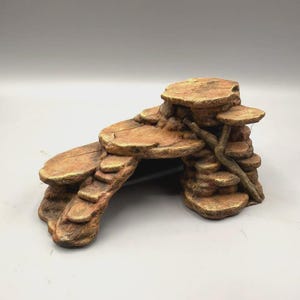
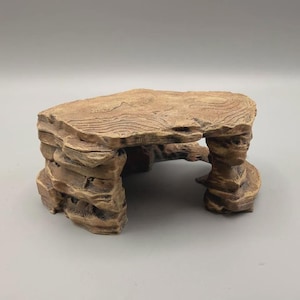
Note: some photos show the hide painted as a finishing example. The product ships unpainted.
❓ FAQ
💧 Can this be used in a wet or misted enclosure?
Yes, when you choose the PETG Wet Model. PETG is the material CurioPrinta uses for damp, misted, bioactive, and partially submerged conditions because it handles prolonged moisture better than standard PLA. The piece is designed as a terrestrial corner hide, so the top basin only works above the water line, and it is not intended to sit fully submerged in an aquarium.
🎨 Is the wet version painted?
No. The PETG Wet Model ships completely unpainted in a solid filament color. Any painted images are finishing examples only.
🧱 Can I order this in PLA?
Yes, as the PLA Dry Model for arid terrariums, dioramas, tabletop terrain, and dry display. PLA is not recommended for submerged use, constantly wet or misted enclosures, strong UV lighting, or keeping water in the top basin.
💦 Can I put water in the basin on top?
The basin is shaped to hold a small amount of water, and it also works filled with moss, leaf litter, or substrate as a planting pocket. Whether standing water is appropriate is your call: choose the PETG Wet Model, keep the volume suitable for your species, refresh it often, and scrub it regularly, since 3D printed surfaces hold residue more readily than glass or ceramic.
☀️ Which version should I pick for a UV-lit setup?
Choose the PETG Wet Model. PETG holds up to high-output UV far better than PLA. It is not immune, since continuous UV can gradually embrittle any plastic over time, but it is the more durable choice for brightly lit enclosures.
🧩 Does it need assembly?
No. All four sizes print and ship as a single piece.
🖌️ Can I paint it myself?
You can, but for anything in an animal habitat you must independently research and confirm that any paint or coating is suitable for your intended species and conditions. CurioPrinta does not recommend customer-applied paint for wet or submerged use and ships the hide unpainted.
🧹 How should I clean it?
Rinse the PETG Wet Model with clean water and use a soft brush if needed, including the basin and the inside of the chamber. Avoid soaps, bleach, solvents, abrasives, boiling water, and dishwashers. Dust the PLA Dry Model with a soft brush or a lightly damp cloth.
📷 Will it look exactly like the photographs?
It will be very close, but small differences in texture, layer lines, and color are normal for made-to-order 3D prints, and appearance can shift under terrarium lighting or when the surface is wet.
🦎 Is it suitable for my specific reptile, amphibian, or invertebrate?
That depends on your animal and setup, so please compare the entrance opening, interior height, and overall footprint against your species and follow qualified husbandry guidance. CurioPrinta cannot guarantee compatibility with any specific animal.
Designed by novYTerra -
Shipping & Policies
Shipping from United States
Processing time
5-7 business days
Customs and import taxes
Buyers are responsible for any customs and import taxes that may apply. I'm not responsible for delays due to customs.
Payment Options
Returns & Exchanges
Returns & exchanges not accepted
But please contact me if you have problems with your order
Privacy policy
Privacy Policy for CurioPrinta
At CurioPrinta, your privacy is very important to us. This Privacy Policy outlines how we collect, use, and protect your personal information when you visit our Etsy store and make purchases.
Information We Collect
When you make a purchase from our store, we collect the following information:
Your Name: To personalize your experience and for order processing.
Shipping Address: To deliver your purchased items.
Email Address: To communicate with you about your order, including order confirmation, shipping updates, and customer support.
Payment Information: Payment processing is handled securely through Etsy's payment system. We do not have access to your credit card or bank information.
How We Use Your Information
We use the information you provide for the following purposes:
To process and fulfill your orders.
To communicate with you regarding your order and provide customer support.
To improve our products and services based on your feedback.
To comply with legal obligations, such as tax and regulatory requirements.
Sharing Your Information
We respect your privacy and will not sell, trade, or share your personal information with third parties, except:
Etsy: As an Etsy seller, we share information with Etsy as necessary to provide our services and comply with our obligations under Etsy's Seller Policy and Terms of Use.
Shipping Providers: We share your shipping address with postal or courier services to deliver your order.
Legal Requirements: If required by law, we may disclose your information to comply with legal processes, government requests, or enforce our policies.
Data Retention
We retain your personal information only for as long as necessary to fulfill your orders, provide customer support, and comply with legal requirements. Your information is securely stored and protected.
Your Rights
You have the right to access, correct, or delete your personal information. If you wish to exercise these rights or have any concerns about your data, please contact us through Etsy's messaging system.
Cookies and Tracking Technologies
Etsy uses cookies and similar tracking technologies to provide a better shopping experience. Please refer to Etsy's Privacy Policy for more information on how they use cookies and how you can manage your preferences.
Changes to This Privacy Policy
We may update this Privacy Policy from time to time. Any changes will be posted on this page, and the revised date will be indicated at the top of the policy.
Contact Us
If you have any questions or concerns about our Privacy Policy or how we handle your personal information, please contact us through Etsy's messaging system.
Related Products